What I was trying to achieve: a UI that looked like something I’d actually want to use
The session before this one crashed mid-implementation. No handover, no context — just a git log showing Task 1 committed and Tasks 2–12 still pending. The plan was intact, so we picked up at Task 2 and worked through the rest.
The Archive Room aesthetic is simple: parchment background (#f4f0e8), ink-black primary (#2a2218), muted-slate accent (#4a6a8a), Georgia serif italic logo, 2px border radius throughout. Warm instead of cold. Archive instead of terminal. Thirteen CSS tokens replacing several dozen hardcoded hex values from the GitHub-dark palette.
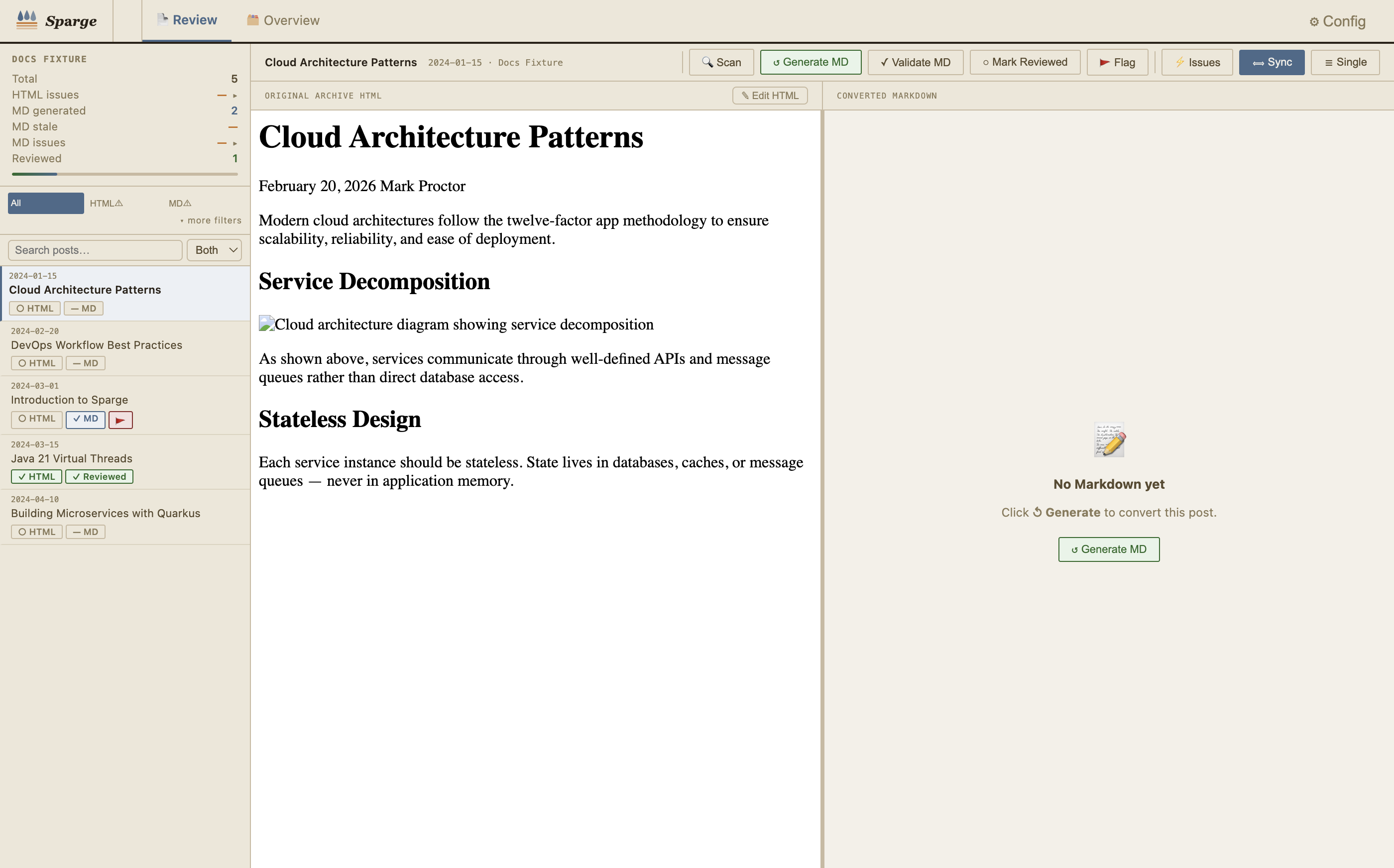 Post list on the left, HTML source in the middle, rendered Markdown on the right. Parchment chrome throughout.
Twelve tasks and three bugs caught before they shipped
We used subagent-driven development — a fresh Claude instance per task, two review passes after each: spec compliance first, then code quality. This was the right call.
The spec compliance pass kept implementations honest — checking the CSS matched the spec exactly, not approximately. The code quality pass found things the implementer missed. Three genuine regressions, caught before they landed.
The missing .visible rule. Task 8 replaced the #tabbar CSS block. The implementer wrote all the correct new rules. The adjacent #tabbar.visible { display:flex; } rule — the one JavaScript toggles to show the tab bar — was simply absent from the replacement. The tab strip would have been permanently invisible. No console error, no obvious symptom until you tried switching to single-page layout. A code quality reviewer caught it.
The crumb date class. Task 5 added CSS for .crumb-date — mono SF font at 9px for the post date in the action bar. The CSS was correct. The JS building the crumb was emitting <span style="margin-left:6px"> instead of <span class="crumb-date">. The class never matched anything. A reviewer caught it; one attribute swap in the JS template fixed it.
The iframe var(--error) silence. Task 12’s final sweep replaced #f85149 with var(--error) everywhere — including in a JS function that injects a <style> tag into an iframe’s contentDocument. CSS custom properties don’t resolve across frame boundaries. The iframe has no access to the host page’s :root tokens. The outline would have rendered as nothing, silently. Literal hex #8a2a2a in that one line, tokens everywhere else.
Three regressions. None obvious from visual inspection. Two with no errors at all. The review loop was worth every extra round trip.
The editor and the projects page
The CodeMirror editor also needed restyling. It was on material-darker — correct for the old dark UI, wrong for parchment. We switched it to CodeMirror’s default theme and wrote a custom CSS block scoped to body[data-editor-theme="light"]: warm cream background (#f0e8d4), rust-brown HTML tags, slate-blue Markdown headers. A toggle button in the edit sidebar switches back to material-darker for anyone who prefers it, persisted in localStorage.
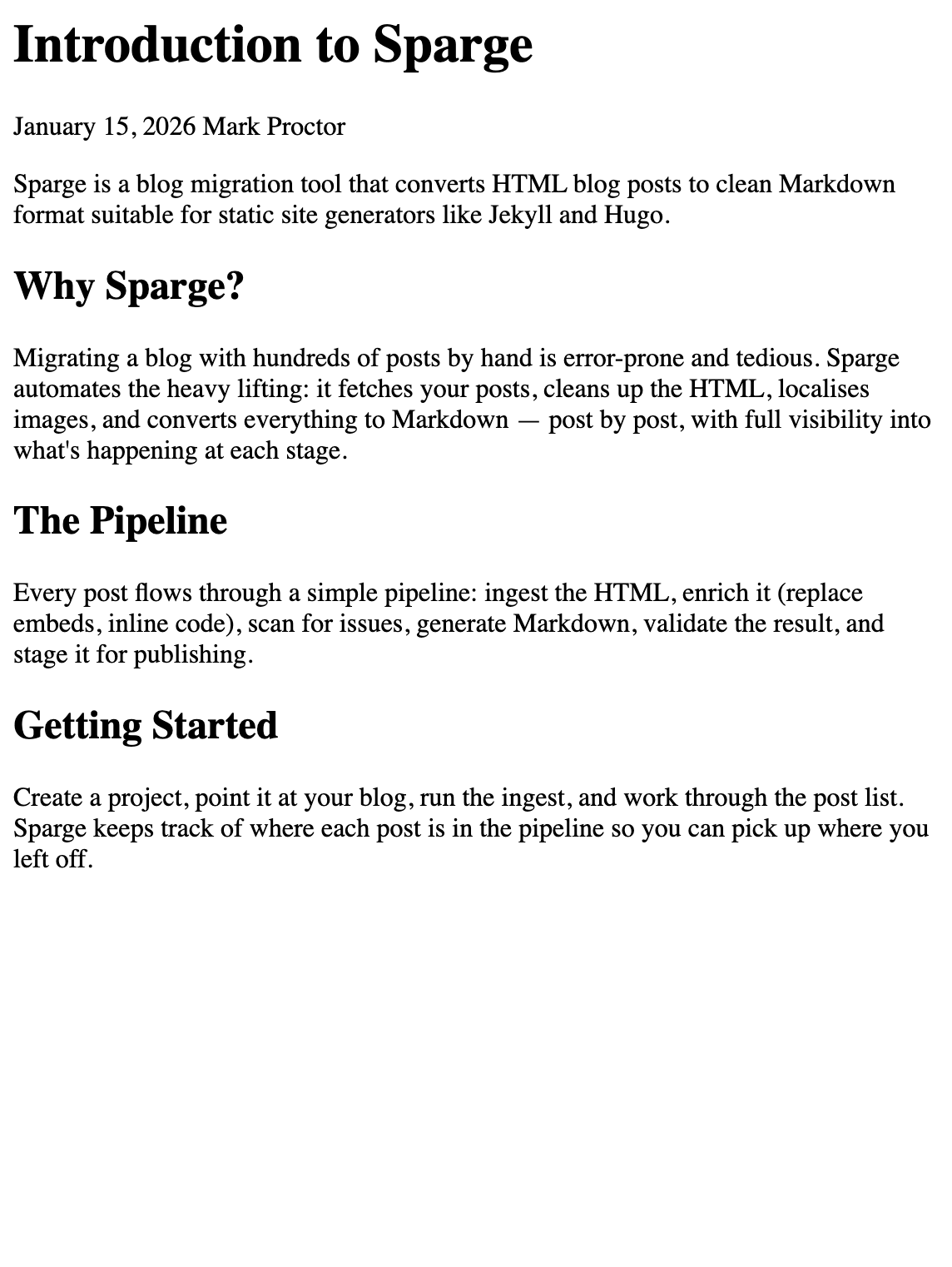 CodeMirror in the Archive Room light theme — warm parchment, sepia/slate syntax colours.
projects.html still had the full GitHub-dark palette after index.html was done. Same job, one task: add the :root block, sweep every dark hex, match the component patterns. The only interesting decision was the SVG logo — CSS var() in SVG presentation attributes is unreliable across browsers, so we used literal hex instead: #4a6a8a for the droplets, #c87020 for the filter bars.
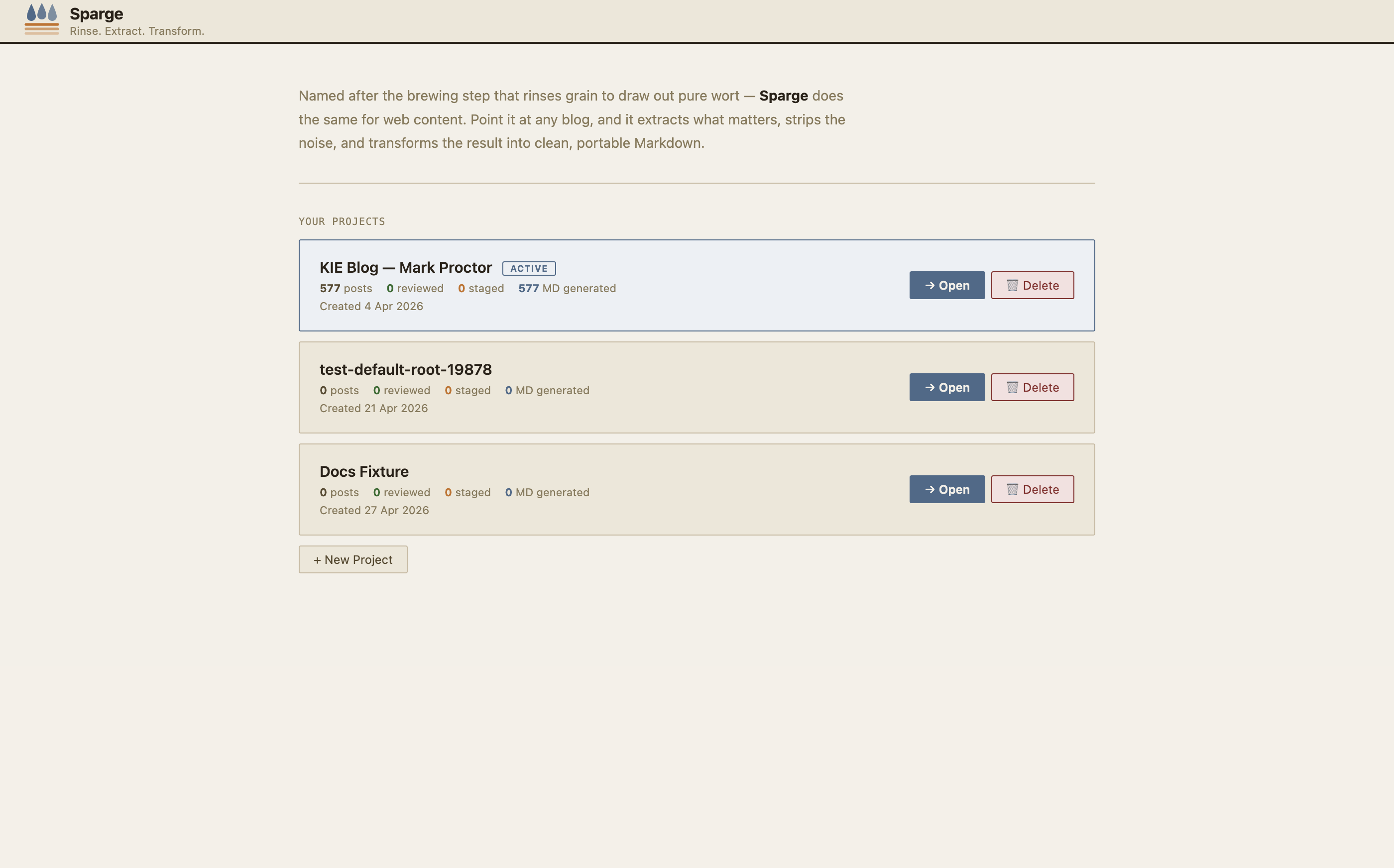 Projects page, consistent with the main UI.
The eight tests that weren’t pre-existing
The test suite had eight failures I’d assumed were pre-existing. They weren’t.
check_md_notation_in_text had a guard: if not adjacent_char.isalnum(): continue — meaning it only flagged formatting elements immediately followed by a letter or digit. The tests expected (, :, and , to trigger it too. The comment said “only a missing space before a word or digit is a real problem.” The tests disagreed, correctly — html2text eats the trailing space inside <b>text </b> regardless of what follows. Remove the guard, seven tests pass.
The check_suspicious_encoded_html regex had \?xml explicitly excluded with a comment: “XML declarations are always intentional.” One test said otherwise. Add \?xml to the pattern, one more test passes.
The four remaining failures in test_md_validator.py are genuinely pre-existing.
Electron packaging is next — bundle the Python side as a self-contained binary, wrap the whole thing in a native window. The UI is already a web app; the server is already HTTP. The architecture fits without changing much.