The Game Has Stakes Now
Date: 2026-04-09 Type: phase-update
Before the fight: clearing the economics bug
There was a budget bug I’d been carrying. The economics decision service was overcommitting resources every tick — hand it 110 minerals and watch it queue both a Pylon (costs 100) and a Probe (costs 50).
The cause: EconomicsFlow used four sequential consume() steps, and Quarkus Flow serialises the GameStateTick between them. Each step received a freshly-deserialised ResourceBudget with the original mineral values. The Pylon decision spent 100 minerals on its copy; the Probe decision never saw that spend.
The fix was one method: collapse all four decisions into checkAll(), a single step. No serialisation boundary, one budget object shared across all four checks. I wrote the test first — 110 minerals, conditions that trigger both decisions — confirmed it failed, then applied the fix. It’s that kind of bug: invisible at the API level, obvious once you know where to look.
The combat design: flat damage, Protoss shields, twenty files
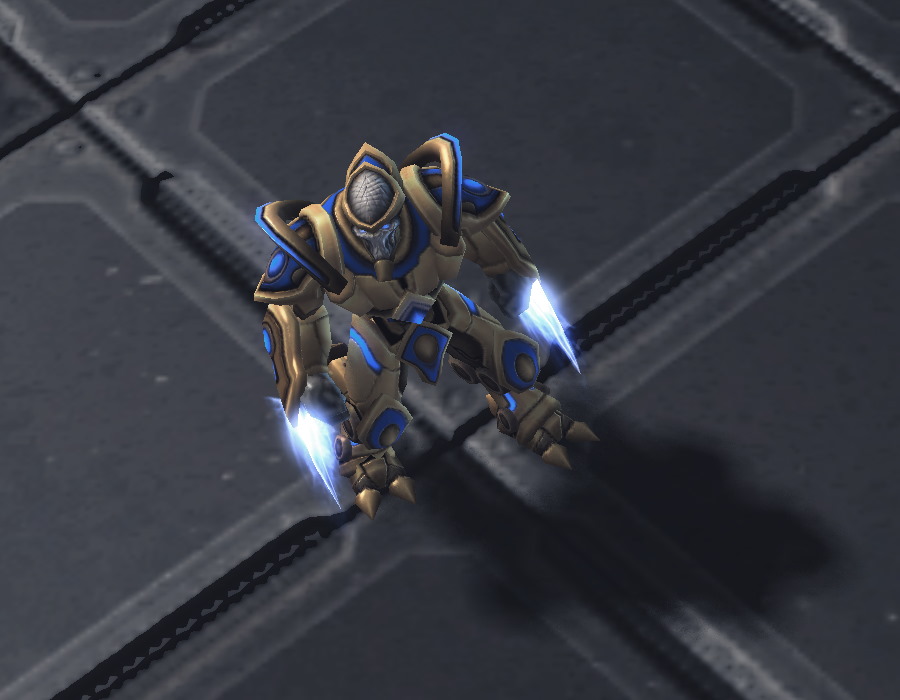
I brought Claude in for E3. The design I settled on: flat damage per scheduler tick, simultaneous two-pass resolution, and shields. No attack cooldowns — at 500ms ticks they’re hard to perceive and easy to get wrong. E4 can swap damagePerTick for per-attack events when fidelity matters.
Shields were worth adding from the start. Protoss units have them, and leaving them out would mean a domain model change later. Adding shields and maxShields to the Unit record touched 20 files. The compiler caught every site — but you still have to care about the right ones. moveFriendlyUnits() replaces each Unit object on every tick. Forgetting u.shields() and u.maxShields() in that replacement silently resets shields to zero every tick. The test suite wouldn’t catch it; the first time you’d notice is when every Protoss unit stops having shields in the visualiser.
The fairness problem in resolveCombat()
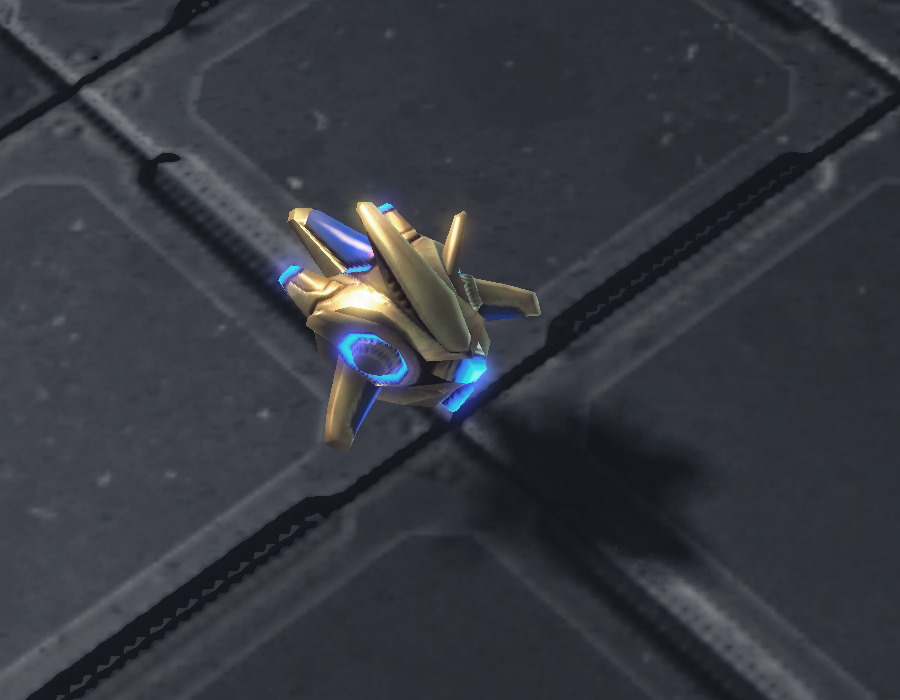
The interesting design decision in combat resolution is the two-pass approach. A naive sequential implementation lets unit A kill unit B before B gets to attack. SC2 doesn’t work that way.
We used collect-then-apply. First pass accumulates pending damage:
nearestInRange(attacker.position(), enemyUnits, SC2Data.attackRange(attacker.type()))
    .ifPresent(t -> pending.merge(t.tag(), SC2Data.damagePerTick(attacker.type()), Integer::sum));
Second pass applies it all at once, then removes the dead. A probe attacking a Zealot dies from the counterattack in the same tick. Both die. That’s the expected outcome and it’s worth getting right from the start.
Health tinting and the Playwright proof
We added health tinting to the visualiser: full colour at high HP, yellow around the middle, red when critical. A separate Claude — running as a code-quality reviewer — caught a nuance: the tint was being set on the PixiJS Container, but the original sprite tint lived on the inner Sprite child. In PixiJS 8 these are different objects. We fixed it by writing to both.
The Playwright E2E tests close the loop. We inject a low-health probe via SimulatedGame.setUnitHealth(), push an observation, then assert on the sprite’s tint property through window.__test.sprite(). No pixel sampling — the state is readable from the JS layer directly.
236 tests pass. Units fight. Probes die red.
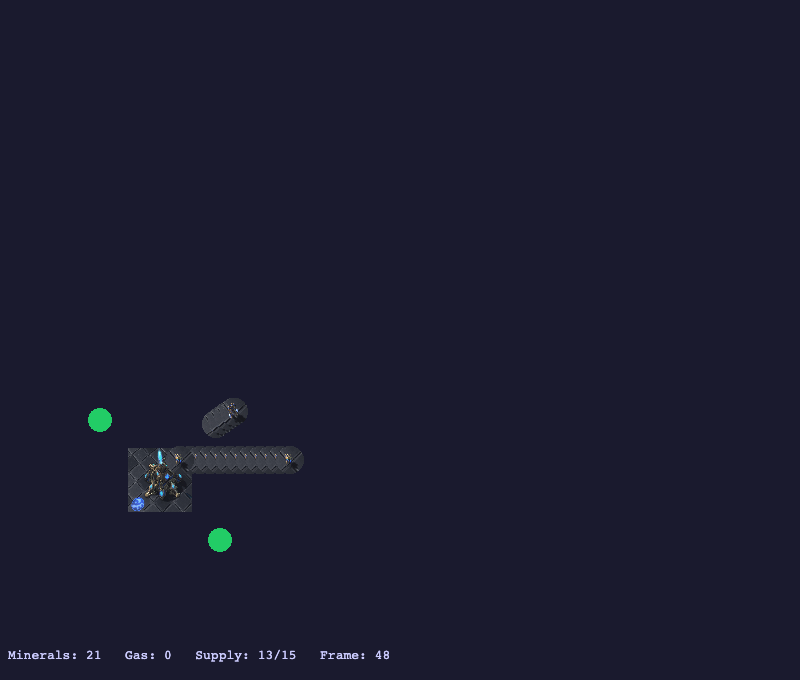
Frame 48: a Zealot has marched from (26,26) and reached the probe line. Supply dropped from 15 to 13 — two probes are already gone.